Most late payments aren't about money. The money was there. The bill just slipped: a due date that moved, an autopay that failed, a yearly charge nobody remembered. The fix isn't trying harder to remember. It's not relying on memory at all.
What a late payment actually costs
Two different things happen when you pay late, on two different clocks.
- Late fees and penalty rates can start as soon as the payment is late, even by a day.
- Your credit report usually isn't touched until the payment is at least 30 days past due. Once it's reported, a late payment can stay on your report for up to seven years, though the damage fades over time.
So if you do miss one, the most important thing is to pay it before it hits 30 days. More on that at the end.
Step 1: One list of every bill
Every bill goes on one list, in one place. For each one, write down:
- What it is and who it's paid to
- The amount, or a typical amount if it changes
- The due day each month, or the due date if it's yearly
- Whether it's on autopay
- Which account it comes out of
Build it from your bank and credit card statements, not from memory. Go back a full year so you catch the yearly bills: registration, insurance premiums, annual subscriptions, property tax if you pay it yourself.
Step 2: Match each bill to a paycheck
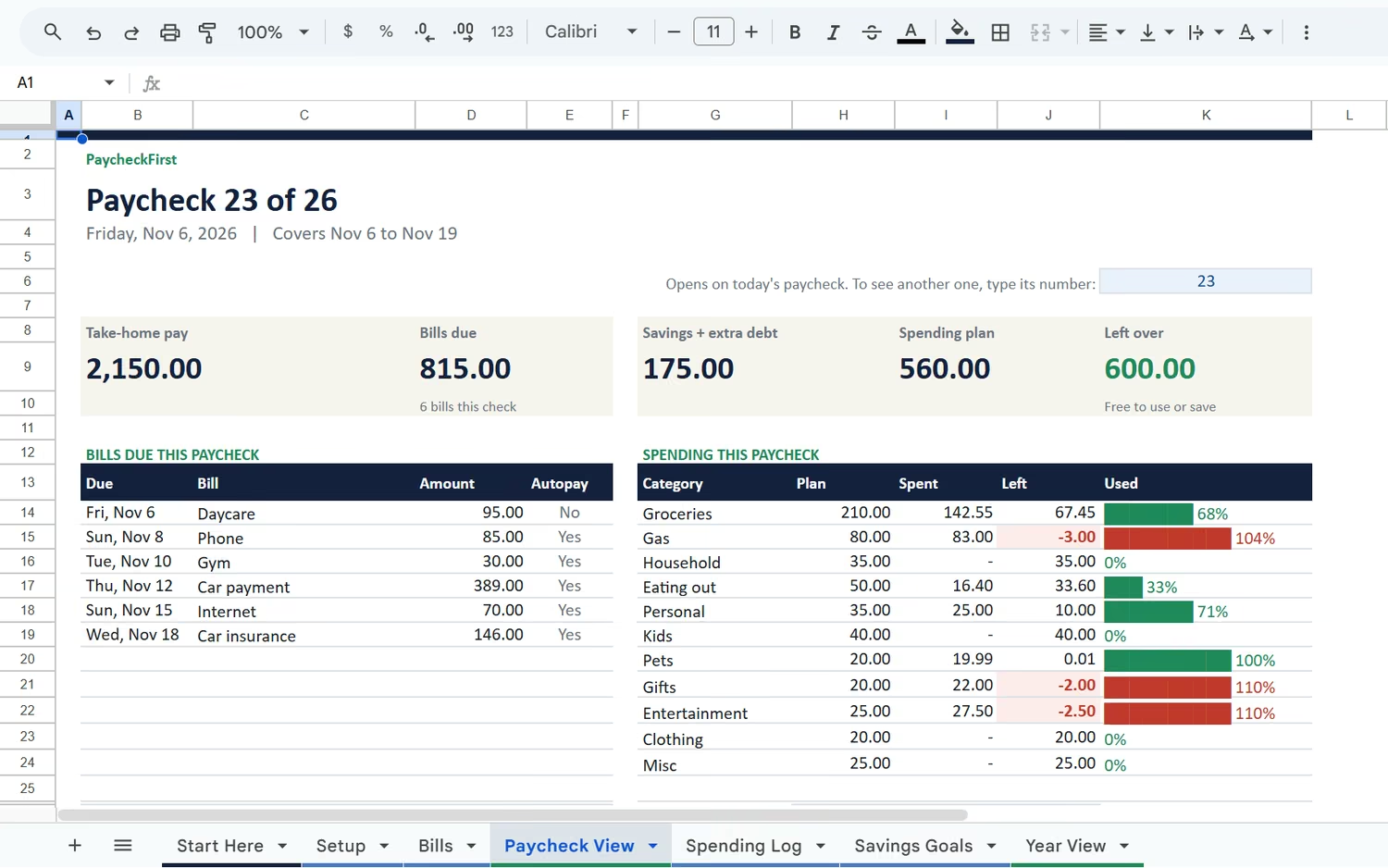
A due date by itself doesn't tell you if the money will be there. Put each bill next to the paycheck that covers it: the last check you get on or before the due date. Now you can see when one check is carrying rent and three other bills while the next one carries almost nothing. That's when you hold money back from the light check.
Step 3: Watch the end of the month
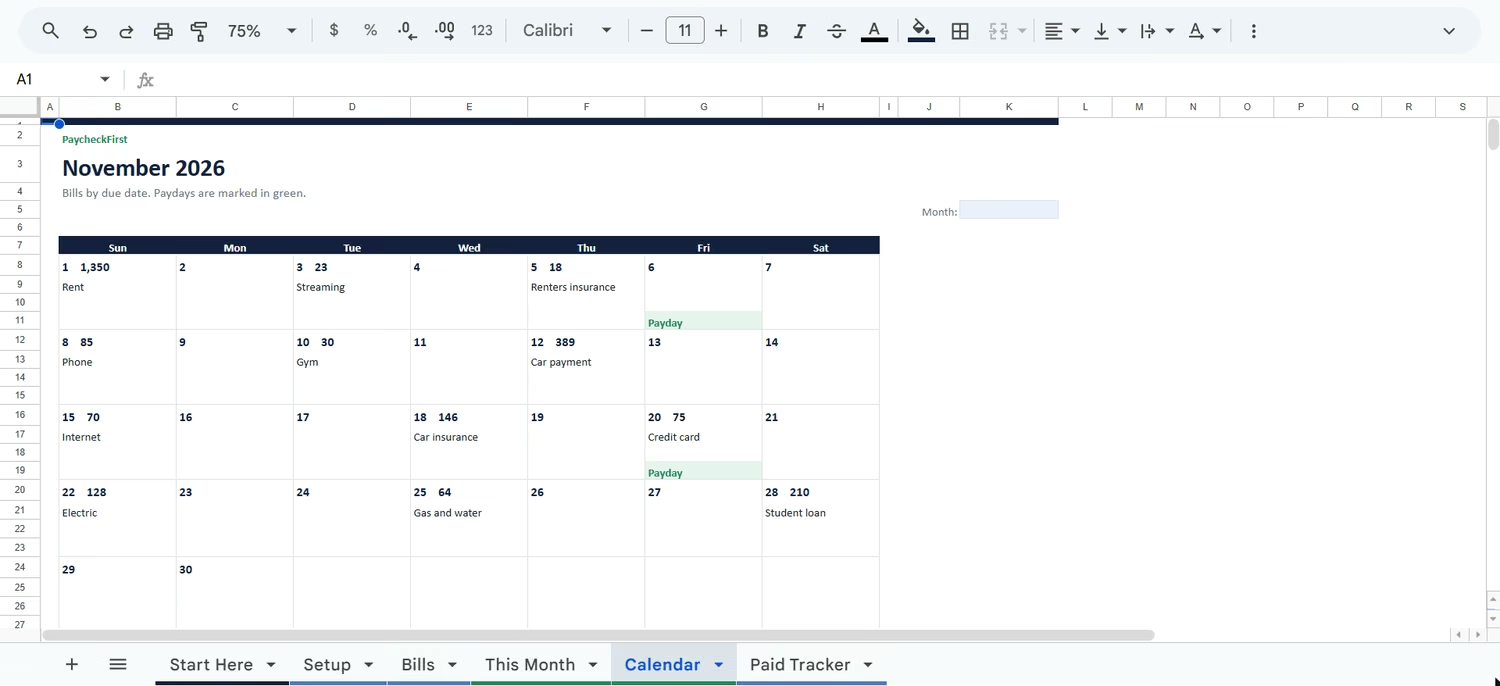
A bill due on the 29th, 30th or 31st won't find that day in every month. February stops at the 28th most years, and April, June, September and November stop at the 30th. Treat those bills as due on the last day of the month, so short months don't sneak up on you.
Step 4: A five-minute check every payday
Pick one time a week or every payday and look at the list. Three questions:
- What's due between now and the next paycheck?
- Is there money in the right account for each one?
- Did everything that was due last time actually get paid?
Mark each bill paid when it clears, not when you think it should have. That last part is where autopay problems get caught.
Autopay: use it, but check it
Autopay is the best tool there is for not missing due dates. It can also fail quietly. A card on file expires, an account gets closed, or a variable bill comes in higher than what's sitting in checking. Keep autopay bills on your list and mark them paid like the rest. If one doesn't show as paid, you'll catch it in days, not when the late notice comes.
Ask to move a due date
If a bill keeps landing right before payday, call and ask whether they'll move the due date. A lot of companies will. Lining bills up with your paychecks is the cheapest fix there is.
If you do miss one
- Pay it as soon as you can. Getting the account current before it's 30 days past due usually keeps it off your credit report.
- Call and ask about the fee. Some companies will waive a late fee, especially the first one. It doesn't hurt to ask.
- Find out why it slipped. Then fix the system, not just the bill.
This is general information about budgeting, not financial advice. Check your own card and loan agreements for how your lenders handle late payments.