In the trades you get paid by the check. The bills don't care when payday lands. Rent hits one check, the car payment hits another, and a budget built by the month never shows you which check is going to come up short.
Budgeting by the paycheck fixes that. Instead of asking whether the month works, you ask whether this check works. It takes about an hour to set up, and after that it's a few minutes each payday.
Why a monthly budget misses the problem
Say you take home $2,150 every two weeks, and this month your paydays land on the 6th and the 20th. Your regular bills look like this:
| Bill | Due | Amount |
|---|---|---|
| Rent | 1st | 1,400.00 |
| Electric | 3rd | 140.00 |
| Phone | 8th | 85.00 |
| Car payment | 12th | 389.00 |
| Internet | 15th | 70.00 |
| Car insurance | 18th | 146.00 |
| Streaming | 25th | 16.00 |
| Total | 2,246.00 |
By the month, you bring home $4,300 and your bills come to $2,246. That leaves $2,054, and the budget says you're fine.
Now look at it by the check. The check on the 6th has to cover what's due from the 6th to the 19th: phone, car payment, internet and insurance. That's $690. The check on the 20th has to cover what's due from the 20th until the next payday: streaming, rent and electric. That's $1,556.
| Paycheck | Take-home | Bills it covers | Left for everything else |
|---|---|---|---|
| The 6th | 2,150.00 | 690.00 | 1,460.00 |
| The 20th | 2,150.00 | 1,556.00 | 594.00 |
Same month, same bills. One check leaves you $1,460 for groceries, gas and everything else. The other leaves $594. If you spend the first check like the month is fine, the second check is where it catches up with you.
Step 1: List every bill once, with its due date
Start with one list. For each bill, write down the amount, the day it's due, and whether it's on autopay. Get them off your bank statement and your credit card statement, not from memory. The ones people forget are the small ones and the yearly ones.
- Monthly bills get a due day, like the 12th.
- Yearly bills get a date, like car registration in March or a six-month insurance premium.
- Bills that come out of every check, like a child support payment or a savings transfer, just go on every check.
Step 2: Put each bill on the check that pays it
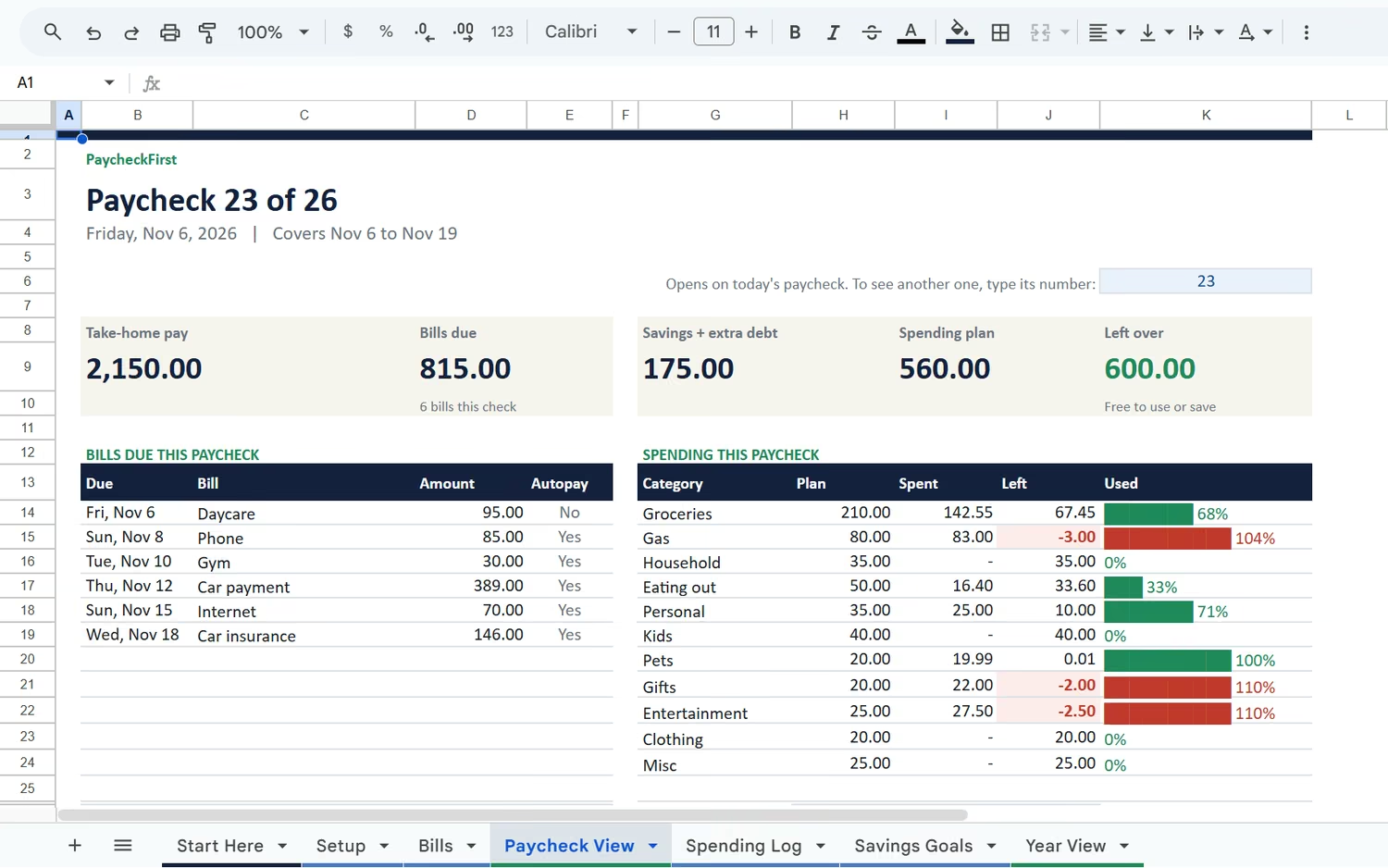
The rule I use is simple: a bill gets paid by the last paycheck on or before its due date. A bill due the 20th comes out of the check you get before the 20th. If payday is the 20th, it comes out of that check.
Once every bill is sitting on a check, you can see the short ones coming weeks ahead. That's the whole point. A short check you see coming is a plan. A short check you find out about at the gas pump is a problem.
Step 3: Take savings off the top, then plan the spending
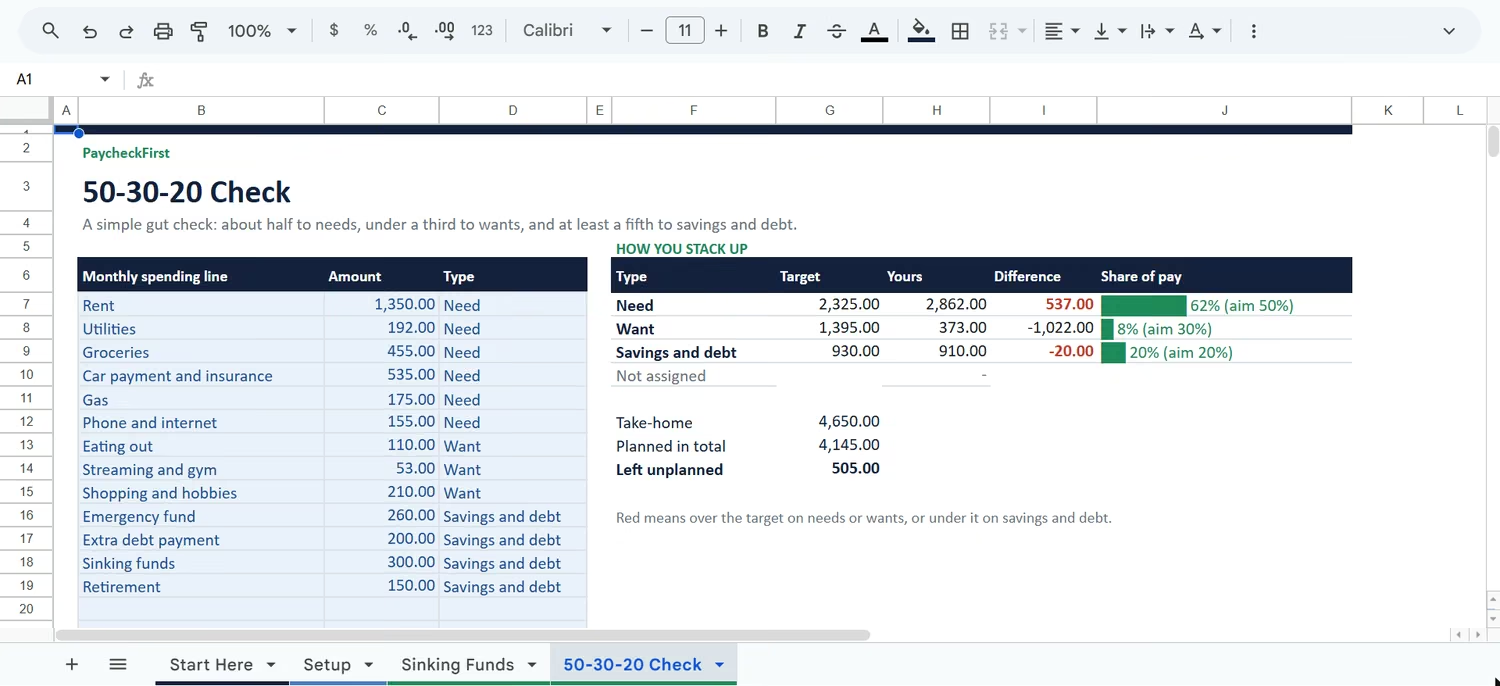
After the bills on a check, take out what you're saving and any extra you're putting on debt. Then split what's left into a spending plan for that check: groceries, gas, household, kids, eating out. It doesn't need to be perfect. It needs to be written down, so you know what "left over" actually means.
When a check is short, you have two honest options: move some money forward from the check before it, or plan a leaner two weeks. Either one works if you decide it ahead of time.
Step 4: Look one check ahead every payday
Every payday, look at this check and the next one. Ask two questions: does this check cover what's on it, and does the next one? If the next one is short, leave some of this one alone. A running total across the year makes this easy, because you can see whether earlier leftovers cover the tight checks later on.
The months with an extra paycheck
If you're paid every two weeks, you get 26 checks in most years. Twelve months of two checks is only 24, so two months bring a third check. If you're paid weekly, you get 52 checks, and four months bring a fifth. Every so often the calendar works out to one more payday than that. If you're paid twice a month or monthly, the count never changes.
If your budget works on two checks a month, the third check isn't needed for your regular bills. That makes it the easiest money you'll ever find. Decide where it goes before it shows up. Good places to send it:
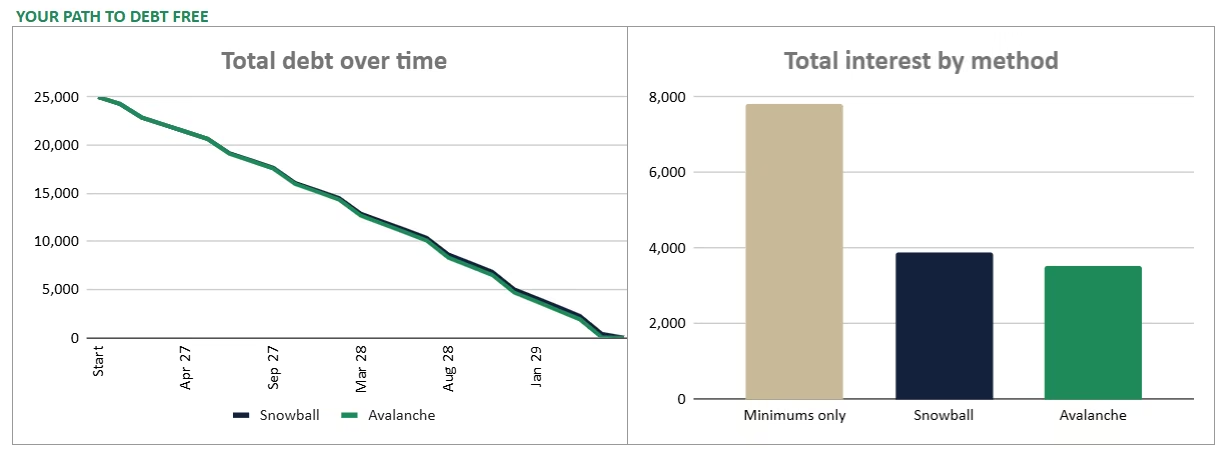
- A big extra payment on your target debt, if you're paying debt down.
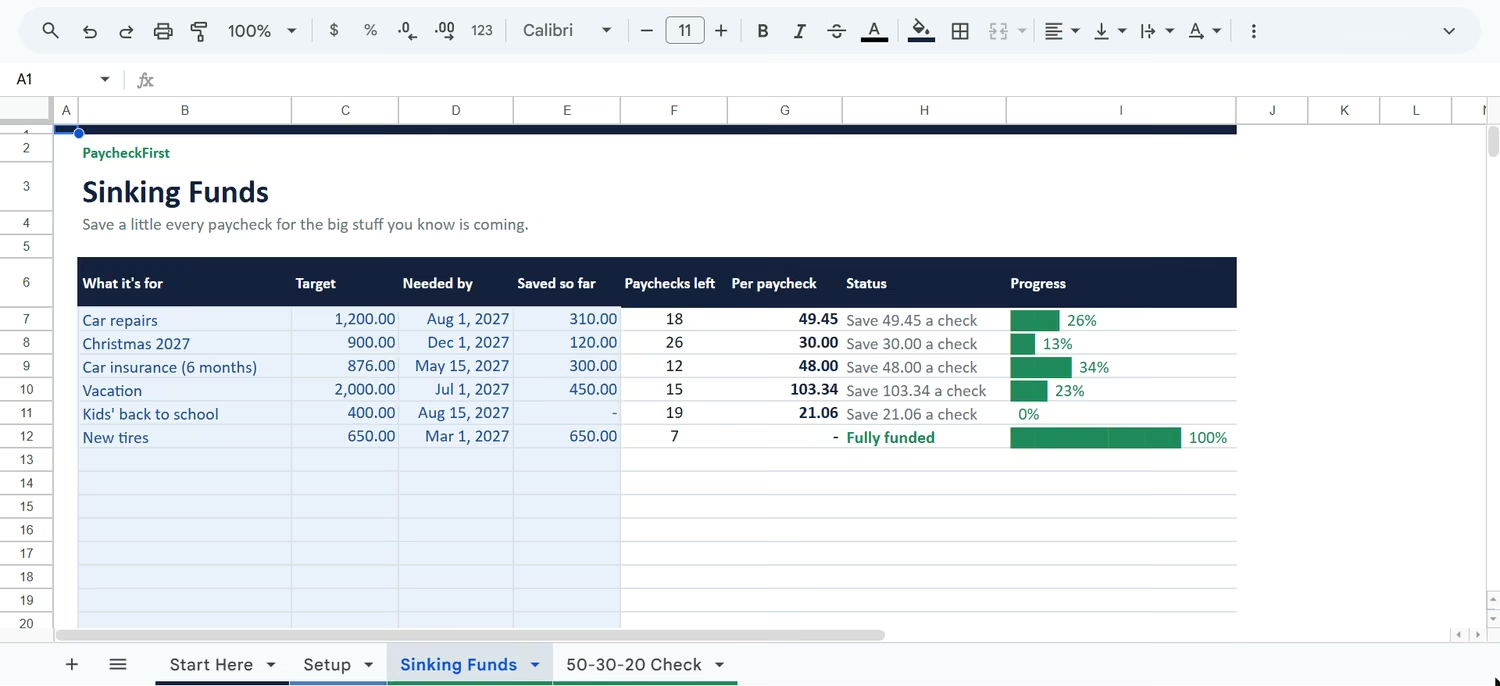
- Your sinking funds for the bills you know are coming, like Christmas or tires.
- An emergency fund, if you don't have one yet.
Mark the extra-check months on your calendar now. When the money lands, it already has a job.
When payday moves
A payday that lands on a bank holiday may get deposited a day early or a day late, and some months your check will be a different amount because of overtime or fewer hours. Use the real date and the real amount when you know them. A plan built on what actually hit your account is the only one worth trusting.
The short version
- List every bill once, with its due date.
- Put each bill on the last paycheck on or before its due date.
- Take savings and extra debt off the top, then plan the spending for that check.
- Every payday, look one check ahead.
- Give the extra-paycheck months a job before they arrive.